

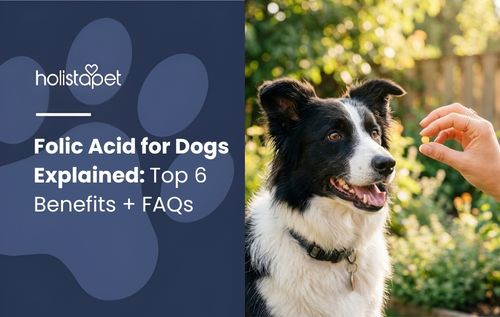
Folic acid is often overlooked in canine nutrition, yet it plays an important role in overall health and it's just one piece of the puzzle when it comes to dog diet advice. Also known as vitamin B9, it supports several key bodily functions that help maintain a dog’s well-being.
- What Is Folic Acid and How Does It Work?
- How Does Folic Acid Benefit Dogs?
- Folic Acid for Dogs - Frequently Asked Questions
In this article, we'll learn the top six benefits of folic acid for your pet and how it compares to other nutrients like vitamin c for dogs when building a complete supplement plan. Plus, we’ll answer all your burning questions about its sources, dosages, and supplementation. Ready to start learning? Let’s begin!
What Is Folic Acid and How Does It Work?
In a nutshell, folic acid is a form of vitamin B9. Another form you may have heard of is folate. Folate naturally exists in certain foods, while folic acid is usually found in supplements and fortified products. Folic acid plays a key role in DNA synthesis and cell division, making it essential for healthy tissue maintenance and development, especially in growing puppies.
Folic acid supports overall canine health by promoting cell growth and repair, contributing to healthy development in breeding dogs, and helping maintain immune function similar to how astaxanthin for dogs supports cellular defense and overall vitality. In general, sufficient folic acid in your dog's diet can significantly improve their vitality and well-being.
How Does Folic Acid Benefit Dogs?

Folic acid plays an important role in supporting growth and development, particularly in younger dogs. Below is a brief overview of its key benefits:
- Cell Growth and Repair
- Strong Red Blood Cells
- Proper Fetal Development
- Healthy Immune System
- May Support Heart Health
- May Aid Cognitive Function
1. Cell Growth and Repair
Folic acid is involved in cell production and maintenance by helping synthesize folate, which acts like tiny building blocks for these processes. Cell growth and repair are essential for puppies to develop properly and maintain overall health, including recovery from minor tissue damage.
2. Strong Red Blood Cells
When folic acid assists DNA synthesis and cell division, it also supports red blood cell formation. These cells transport oxygen throughout the body, supporting muscle activity, brain function, and overall physiological processes. Low folate levels can lead to folate deficiency anemia. This condition can then lead to fatigue, weakness, and overall poor health. High folate levels can sometimes indicate low vitamin B12, which may lead to anemia, skin problems, muscle weakness, and cardiovascular issues.
Pairing folic acid with a comprehensive multivitamin soft chews for dogs can help ensure your dog gets a full spectrum of nutrients to support red blood cell health alongside B9.
3. Proper Fetal Development
Breeding dogs need folic acid to support proper fetal growth and formation. Proper vitamin B9 intake during pregnancy can help prevent congenital disabilities and ensure puppies are born healthy and strong. The essential vitamin helps tiny pups develop strong bones, organs, and everything else they need inside. Adequate folic acid levels in pregnant dogs support healthier pregnancies and proper fetal development.
4. Healthy Immune System
This vitamin supports the production and function of white blood cells, which are responsible for defending the body against infections and maintaining immune balance and combining it with the best probiotics for dogs can further strengthen your dog's gut-immune connection.
5. May Support Heart Health
Folic acid can help regulate something called homocysteine in your pup's blood. What exactly is homocysteine? It's an amino acid produced when your dog eats meat. High homocysteine levels have been linked to an increased risk of heart problems.
Folic acid helps convert homocysteine into methionine, which supports healthier cardiovascular function and some pet owners also explore CBD oil products for dogs as part of a broader heart and wellness support routine. By keeping homocysteine levels in check, the essential nutrient helps protect your fur baby's heart and reduces the risk of heart disease.
6. May Aid Cognitive Function
Just like humans, canines’ brains need special care as they age. Folic acid is involved in neurotransmitter synthesis and brain development, which can help protect the brain from age-related cognitive decline that may cause forgetfulness or confusion. The essential vitamin might help dogs remember things better and learn new tricks more easily. This nutrient supports brain function and may help maintain cognitive health in aging dogs.
Folic Acid for Dogs - Frequently Asked Questions

What Is Folic Acid Deficiency in Dogs?
Folic acid deficiency can negatively affect a dog’s overall health and should be avoided.
- Weakness
- Fatigue
- Poor Growth
- Reduced Appetite
- Gastrointestinal Problems
- Anemia (in severe cases)
A few things can lead to folate deficiency in dogs. Maybe your dog's food isn't packed with the nutrients they need. Sometimes, dogs need more folic acid during pregnancy or illness. Also, malabsorption might be happening in their digestive tract. Certain medications and treatments can affect folic acid absorption.
How Do I Add More Folic Acid to My Dog’s Diet?

If your pet is dealing with folic acid deficiency, adding more folic acid and folate to your dog's diet is the way to go. You can do this through one or a combination of the following:
- Commercial Dog Foods. Many high-quality commercial dog foods contain essential vitamins, including folic acid. Check the label to ensure your chosen brand includes this key nutrient.
- Natural Sources. Foods like liver, leafy greens, and certain vegetables are rich in folate. Adding these to your dog's meals can naturally boost their folate levels.
- Folic Acid Supplements. A quality supplement is another way to increase your pup's vitamin B9 intake. These supplements are available in tablet, liquid, powder, or THC-free dog treats forms that make daily dosing simple and stress-free.
Some commercial dog supplements, including those formulated with folic acid, are available in various forms such as chews, tablets, and powders.
How Much Folic Acid Do Dogs Need?
The recommended folic acid dose for dogs depends on factors such as age, size, and health status. In general, most pups need about 0.018 mg of folic acid per kilogram of body weight daily. But pregnant pets, nursing dogs, and those with certain health conditions might need more. It's always best to consult your vet to determine the perfect dose for your furry friend.
Can Dogs Overdose on Folic Acid?
It rarely happens, but it's still possible for dogs to overdose on folic acid. An overdose happens when dogs get too much folic acid over an extended period. Symptoms can include stomach upset, nausea, vomiting, and diarrhea.
To prevent an overdose, always follow the recommended dose for your pet. Keep an eye on your dog's folic acid intake, whether from food or supplements, to make sure they don't get too much of this essential vitamin. If your pup shows an adverse reaction, bring them to the vet, stat.
Are There Any Potential Side Effects or Risk Factors?
While folic acid is generally safe for our canine friends, you should still be aware of potential side effects and risk factors. Some dogs may experience queasiness or stomach troubles when using folic acid supplements for the first time. But don’t worry; these symptoms usually go away as your dog’s system adjusts to the product.
Risk factors include dogs with certain medical conditions. They might be under specific medications or treatments that can interact with folic acid. For your pet’s ultimate safety, consult your trusted vet. Be sure to inform your veterinarian about any medications, supplements, or herbal therapies your dog is receiving, as these can affect how folic acid works and help ensure safe and effective care. Doing so is especially important if your dog has existing health issues or is on medication.
Final Thoughts - Folic Acid for Dogs
There is absolutely no doubt that folic acid should be part of your furry companion’s wellness routine. This essential vitamin can significantly support your furry companion’s health and well-being in all sorts of ways, from their cells to their brains and immunity.
Whether through natural sources, commercial dog foods, or supplements, ensuring your furry companion gets enough folic acid is paramount and resources like VCA: Vitamins and Minerals for Dogs and AKC: Does My Dog Need Vitamins? can help guide your decisions alongside your vet. Dog supplements containing folic acid may support overall wellness when used as part of a balanced diet and under veterinary guidance.








Leave a comment
All comments are moderated before being published.
This site is protected by hCaptcha and the hCaptcha Privacy Policy and Terms of Service apply.