

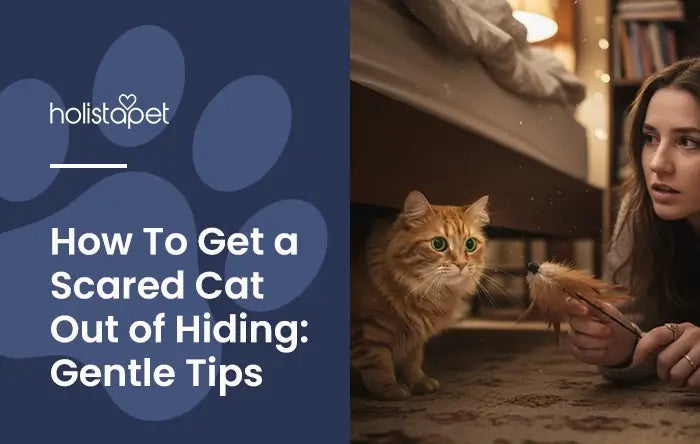
A fearful kitty doesn't need coaxing; they need soothing vibes and patience. If you're wondering how to get a scared cat out of hiding, start by lowering the noise and offering quiet company.
Most felines hide to feel in control, so give them their own space first. You'll see how a few moments of stillness can work wonders for your cat's confidence.
Why Cats Hide When They’re Scared

When fear hits, hiding gives felines a sense of safety and control. A fearful cat often slides under the bed, behind furniture, or into tight corners where they feel unseen. It's their natural way of coping. This quiet escape helps them slow down their thoughts and observe from a distance until they feel secure enough to come back out.
Natural Instincts and Survival Behavior
Cats are wired to keep out of sight when they sense danger. It's pure survival. Even the most confident feline may dart under the couch if something feels off.
In the wild, staying concealed protects them from predators and loud threats. That instinct still runs deep, even in cozy homes. Giving them time helps them rebuild confidence at their own pace.
Common Triggers That Cause Fear or Nervousness
Even the bravest feline can spook easily. Understanding what sets them off helps you create a more peaceful home environment for your furry friend. Watch for triggers like:
- Loud Noises, New Environments, or Guests. Thunder, vacuums, and strangers can send a cat running for their favorite retreat.
- Past Trauma or Negative Experiences. Cats rescued from shelters may associate certain sounds or movements with past fears.
- Health Issues or Physical Discomfort. Swelling, soreness, or other discomfort can make a kitty feel vulnerable.
- Strong Scents or Unfamiliar Aromas. Perfumes, cleaning sprays, or candles may overwhelm their sensitive noses.
- Household Items That May Frighten Cats. Balloons, cucumbers, mirrors, and even running water can trigger sudden fright.
How To Tell if Your Cat Is Scared or Just Shy
Watch how your kitty moves and reacts. Shy cats often peek around corners or stay close to familiar objects, while frightened ones freeze or bolt. If your pet disappears for long stretches, avoids interaction, or shows tense posture, fear—not shyness—is likely behind their behavior.
Body Language and Vocal Clues
Your cat's body language says it all. A feline who's afraid keeps its body low, tail tucked, and ears pinned back. Their pupils widen, and you might notice quick, darting glances. Some stay silent, while others hiss or let out short cries when nervous. Listen for changes in tone: soft meows can shift to sharp ones when fear sets in.
Changes in Appetite or Litter Box Habits
A fearful cat may skip meals or avoid their bathroom altogether. When a cat feels unsafe, mealtimes or potty breaks become secondary to finding shelter. You might notice your kitty eating less, refusing snacks, or holding it for long periods. Once order returns, normal daily routines—like eating and bathroom habits—usually follow.
Related Post: What Are Cats Scared Of? Feline Fears & How To Help
How To Get a Frightened Cat Out of Hiding Safely

Helping a fearful kitty feel secure starts with patience, not pressure. Below are simple ways to gently build your cat's trust and confidence:
- Stay Calm, Move Slowly, and Provide Time If Needed
- Use Gentle Voices and Avoid Direct Eye Contact
- Offer Treats, Toys, or Familiar Scents
- Create a Safe Path Back to Comfort
- What Not To Do When Helping a Cat From Hiding
Stay Calm, Move Slowly, and Provide Time If Needed
Move slowly, speak softly, and avoid sudden gestures. When your cat retreats to a quiet room or corner, give them time to feel secure instead of rushing the process. Most peek out once they realize nothing scary is happening. Patience shows them you're no threat, which helps rebuild their confidence and trust naturally.
Use Gentle Voices and Avoid Direct Eye Contact
Speak in short, relaxed sentences so your tone stays reassuring. Avoid staring straight at them, as direct eye contact feels threatening to a fearful cat. Instead, blink slowly or look slightly away to show peace. This quiet approach helps the feline feel at ease and more open to stepping out.
Offer Treats, Toys, or Familiar Scents
Try placing small treats or fun toys near your cat's hiding place. Catnip-filled mice, for example, can spark curiosity and comfort. Familiar scents, such as their blanket or your worn shirt, remind them of safety. These gentle cues create a positive experience overall.
Create a Safe Path Back to Comfort
Remove loud distractions, close off open doors, and make sure the path to your cat's safe space feels inviting. You can use treats or gentle objects to guide them back. Keep lighting soft and voices low to avoid spooking them. When your kitty reaches their comfort zone, let them stay there until they're ready to rejoin you.
What Not To Do When Helping a Cat From Hiding
Never pull or chase a spooked cat from their hiding place. That only deepens fear and damages trust. Avoid loud noises, bright lights, or trying to corner them. Don't spray water or shake treats to force them out; it won't work. Instead, keep the area peaceful and safe, so the cat can choose to come out when they feel ready.
How To Comfort a Scared Cat Once They Come Out
Once your cat steps into the open, patience is your best tool. Here's what you can do to help:
- Give Them Space and Patience. Let your cat approach first. Gentle stillness helps rebuild confidence.
- Provide Warm, Enclosed Resting Spots. Cozy blankets or covered beds create a sense of safety.
- Maintain a Quiet, Predictable Routine. Consistent feeding and playtime help your cat feel secure again.
How To Calm a Scared Cat Naturally
Soothing a fearful feline starts with creating peace around them. You can use these natural methods to make them feel at ease and comfortable again:
Soft Music, Calming Pheromones, and Gentle Touch.
Low music, calming pheromones that come in sprays or defusers, and gentle petting or massages can help soothe nervous energy.
HolistaPet CBD Options for Cats.
HolistaPet offers CBD (cannabidiol) oils, soft chews, and tasty cat treats that help promote calm and comfort in anxious kitties. At HolistaPet, every wellness product is carefully crafted. We promise:
- High-Quality, American-Grown, Farm Bill-Compliant Hemp
- Third-Party Lab-Testing for Purity and Potency
- Broad-Spectrum CBD With No THC
- No Fillers or Preservatives
- 100% Plant-Based and Cruelty-Free
How To Get a Scared Cat To Trust You

Building trust takes patience and quiet consistency. Don't forget these tried-and-tested strategies:
- Let Them Approach on Their Own Terms. Cats feel more secure when they are in charge of the pace.
- Build Positive Associations With Food and Play. Treats or a fun feather wand can turn your presence into something rewarding.
- Use Consistent, Soft Communication. A steady voice and schedule help your cat feel at ease day after day.
Related Post: Why Is My Cat Scared of Me? Overcoming Fear in Cats
Preventing Future Fearful Behavior
Small changes can feel huge to a cat, so easing them in helps them stay calm. Don't forget:
- Gradual Introductions to New Environments. Give your cat time to explore new spaces slowly and on their own terms.
- Reducing Household Stress and Sudden Changes. Keep noise low, routines steady, and transitions gentle to prevent future hiding or anxious behaviors.
FAQs About Helping Scared Cats
Every cat reacts differently to fear, but a few common questions come up often. Understanding these helps you respond with patience and care. Below are quick, simple answers to help your cat feel calm and confident again in their home environment.
How Long Will a Scared Cat Stay Hidden?
Most cats keep out of sight until they feel safe again, which can take a few hours to a few days. A fearful kitty watches quietly until the environment feels calm and familiar. Avoid forcing contact, as it only delays progress. Keep food, water, and a litter box nearby, so your pet can relax without leaving their hiding place until they're ready to rejoin you.
Should I Force My Cat Out of Hiding?
Never force a scared feline to come out. Pulling or chasing them creates more fear and damages trust. Instead, make their spot quiet and safe while keeping food and water nearby. Soft talking and gentle movement show there's no threat. When your pet feels calm enough, they'll step out on their own.
Can CBD Really Help Calm a Frightened Cat?
Yes, CBD can help promote calm and comfort in anxious cats. HolistaPet's CBD oils, treats, and soft chews are a great choice. They feature broad-spectrum hemp to support natural relaxation without THC. Many pet parents notice smoother behavior, steadier moods, and better sleep routines. It's pure, plant-based, and crafted with your feline friend's well-being in mind.
When Should I Call the Vet for a Scared Cat?
If your cat retreats for several days, stops eating, or shows signs of discomfort, contact your vet immediately. Extended fear or sudden behavior changes may point to swelling, soreness, or another issue. A professional can rule out medical problems and guide you on easing your cat's nerves. Getting help early keeps your furry companion comfortable and prevents small issues from becoming serious.
Final Thoughts on Helping Scared Cats Feel Safe and Loved
Helping a scared kitty starts with patience, calmness, and trust. Every gentle action you take reminds them that home means safety. A quiet space, steady routines, and soft attention go a long way toward restoring their confidence.
For extra comfort, HolistaPet's CBD oils, treats, and chews offer natural calm backed by quality testing and care. Like you, we believe every cat deserves to feel secure and loved.
 CBD Oil for Cats - Fast Acting
 CBD Cat Treats - Easy Dose
 CBD Calming Chews for Cats - Highly Rated
 CBG Oil for Dogs and Cats - Loved by Thousands










Leave a comment
All comments are moderated before being published.
This site is protected by hCaptcha and the hCaptcha Privacy Policy and Terms of Service apply.