

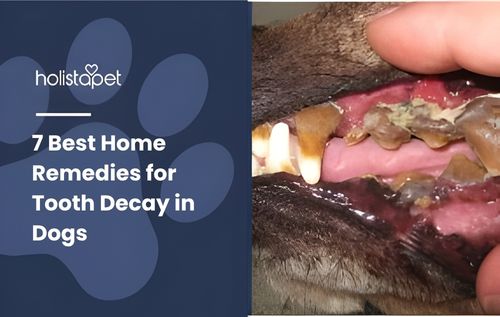
Bad breath, yellow teeth, and gum pain can signal tooth decay in dogs, and many pet owners look for simple ways to help at home. The good news is that a few targeted remedies can slow bacterial damage and keep oral health on track.
For more holistic wellness tips, explore our complete collection of natural remedies for dogs.
What is Tooth Decay in Dogs?
Tooth decay in dogs refers to the gradual breakdown of teeth caused by bacteria, plaque buildup, and poor oral hygiene. A thin film of plaque forms first, then hardens into tartar that attacks the enamel and works deeper into the tooth structure over time.
What Causes Dog Tooth Decay?

Decay begins when food residue and oral bacteria combine to form plaque. Left untreated, plaque mineralizes into tartar, eroding enamel and creating pockets for infection.
- Poor dental hygiene: Skipping regular brushing lets plaque harden into tartar and damage teeth.
-
Diet choices: Soft or sugary foods stick to teeth and feed harmful bacteria.
-
Age: Older dogs face higher risk due to prolonged plaque buildup.
-
Chewing habits: Limited chewing reduces natural cleaning from gnawing.
-
Genetics: Some breeds have crowded teeth that trap debris easily.
- Lack of dental care: Skipping routine checkups allows early issues to worsen.
What are the Symptoms of Canine Tooth Decay?
Canine tooth decay shows up through visible mouth changes, discomfort, and shifts in eating behavior.
-
Bad breath that does not go away.
-
Yellow or brown buildup on teeth.
-
Red, swollen, or bleeding gums.
-
Pain when chewing or refusal to eat.
-
Loose, broken, or missing teeth.
-
Excess drooling or pawing at the mouth.
- Reduced energy due to ongoing discomfort.
What are the Best Home Remedies for Tooth Decay in Dogs?

Tooth decay in dogs can improve at home with simple remedies that reduce bacteria, soothe gums, and loosen plaque buildup.
|
Remedy |
Key Benefit |
How to Use |
Best For |
|
Coconut oil |
May reduce oral bacteria |
Apply to teeth or gums |
Plaque and bad breath |
|
Baking soda |
Removes buildup |
Brush lightly on teeth |
Tartar reduction |
|
Apple cider vinegar |
Kills bacteria |
Dilute in water or wipe |
Oral balance |
|
Aloe vera and turmeric |
Soothes gums |
Apply paste to gums |
Inflammation |
|
Raw bones |
Scrapes plaque |
Supervised chewing |
Physical cleaning |
|
Parsley |
Freshens breath |
Add to food or rinse |
Odor control |
|
Holistapet products |
Supports comfort |
Use as directed |
Pain and inflammation |
1. Coconut Oil Application
Coconut oil reduces harmful oral bacteria and slows plaque buildup
-
Apply a small amount directly to your dog's teeth and gums using a finger or soft brush
- Its high lauric acid content (roughly 50% of its fatty acid composition in cold-pressed, virgin coconut oil) disrupts bacterial cell membranes, making cold-pressed virgin the preferred grade for oral use over refined alternatives.
2. Baking Soda Brushing
Baking soda works as a gentle abrasive that breaks down plaque.
- A 2017 review published in the Journal of the American Dental Association found that sodium bicarbonate-based dentifrice significantly reduces plaque compared to non-bicarbonate alternatives.
-
Dip a damp toothbrush in baking soda and brush lightly
- Neutralizes acids that worsen tooth decay
3. Apple Cider Vinegar Rinse
Apple cider vinegar targets bacteria that contribute to decay.
-
Contains acetic acid, which users report may help reduce bacterial growth when used in diluted rinses, though consult your vet before use, as ACV can irritate sensitive gum tissue
-
Add a small diluted amount to drinking water
- Can also wipe teeth with a diluted solution for direct contact
4. Aloe Vera and Turmeric Paste
These natural ingredients calm inflamed gums and limit bacterial growth.
-
Aloe vera soothes irritated tissue and supports healing
-
Turmeric contains curcumin, a compound that peer-reviewed research links to anti-inflammatory and antioxidant activity that may support gum tissue recovery.
- Apply a thin layer to gums using a cotton swab
5. Raw Bones for Natural Cleaning
Chewing helps remove buildup while stimulating gums.
-
Scrapes away plaque through natural friction
-
Promotes stronger teeth and healthier gums
-
Always supervise to avoid choking or injury
6. Herbal Additions Like Parsley
Parsley freshens breath and supports oral health.
-
Flat-leaf (Italian) parsley, which contains higher concentrations of chlorophyll and volatile oils like apiol and myristicin than curly varieties, delivers stronger antibacterial action against odor-causing bacteria, making it the preferred type for oral support.
-
Finely chop and mix into food
- You can also steep parsley in warm water for five minutes and use the cooled liquid as a mild mouth rinse
7. Natural Dental Support from Holistapet
Holistapet sources its hemp from USDA-certified organic farms and uses CO2 extraction to preserve the full cannabinoid and terpene profile, including myrcene (calming), beta-caryophyllene (anti-inflammatory), and linalool (stress relief).
-
Calming properties may reduce stress during oral care routines
CBD oil for dogs may help support comfort and relaxation during at-home dental care, making brushing and oral handling easier for sensitive pets. The CBD oil tincture, available in 150mg, 300mg, and 600mg strengths, uses a full-spectrum hemp extract with no artificial additives, which may support a calmer response during brushing. This makes HolistaPet most useful for dogs that resist oral handling, where reducing stress is as important as reducing bacteria.
For pets that prefer chewable supplements, CBD hard chews for dogs may provide another convenient option as part of a veterinarian-approved wellness routine.
How Do I Prevent Dental Problems in Dogs?

Preventing dental problems in dogs comes down to consistent care that limits bacteria, supports gum health, and keeps teeth clean.
Brush Teeth Regularly
Daily brushing with a dog-safe toothbrush and toothpaste removes plaque before it hardens, focusing on the gumline where buildup starts. The AVMA recognizes consistent brushing as the single most effective tool for reducing plaque in dogs. [Cite: AVMA Dental Health ]
Provide Dental Chews
Dental chews help clean teeth through mechanical action while chewing.
Dental chews approved by the Veterinary Oral Health Council (VOHC) use mechanical chewing action to scrape plaque and tartar from tooth surfaces. Look for the VOHC seal on packaging as a quality marker for verified oral health benefits.
Schedule Routine Vet Checkups
Professional exams catch early signs of dental issues before they worsen.
-
Vets can detect hidden infections or damage
-
Your vet may schedule a professional cleaning based on the level of buildup.
- The American Animal Hospital Association recommends regular dental evaluations as part of preventive care
Feed a Tooth Friendly Diet
Diet plays a key role in reducing residue that feeds bacteria. Supporting digestive balance with probiotics for dogs may also complement an overall wellness plan, since gut health plays an important role in immune function.
- Dry kibble can help reduce buildup compared to soft food
-
Special dental diets support oral health
- Avoid frequent sugary or sticky treats
Encourage Safe Chewing Habits
Chewing supports natural cleaning and gum stimulation.
-
Offer safe chew toys designed for dental support
-
Avoid overly hard items that can crack teeth
- Natural chewing also stimulates the periodontal ligament, which strengthens tooth-to-bone attachment over time.
Maintain Consistent Oral Checks at Home
Regular checks help spot early warning signs before they progress. For dogs that become anxious during brushing or nighttime routines, some veterinarians may recommend vet-recommended melatonin for dogs when appropriate.
-
Look for discoloration, swelling, or odor
-
Monitor changes in eating or chewing behavior
- Early action reduces the risk of severe dental problems
When Do I Go to the Vet for My Dog’s Tooth Decay?

Go to the vet as soon as signs of tooth decay move beyond mild buildup or start causing pain, infection, or changes in behavior. Home care helps early stages, but advanced cases need professional treatment.
Some symptoms require prompt veterinary attention:
-
Severe bad breath that persists despite cleaning.
-
Bleeding gums or visible swelling.
-
Loose, cracked, or missing teeth.
-
Refusal to eat or difficulty chewing.
-
Pus, discharge, or signs of infection in the mouth.
- Excessive drooling paired with discomfort.
Certain situations call for urgent care:
-
Sudden facial swelling or jaw sensitivity.
-
Signs of extreme pain such as whining or aggression when touched.
- Fever or low energy linked to oral infection.
Veterinarians can perform deep cleaning, remove damaged teeth, and treat infections before they spread. The American Veterinary Dental College warns that untreated dental disease can affect the heart, liver, and kidneys, making timely care essential.
Oral Health Matters for Dogs Too

Home remedies can ease early tooth decay and improve comfort, but consistent care and timely vet visits make the biggest difference. Act early, stay consistent, and support oral health before problems become severe.
Frequently Asked Questions
Can tooth decay in dogs heal on its own?
No. Dental disease does not heal without treatment. Early preventive measures and plaque removal can slow damage, but untreated tooth problems often lead to tooth loss or oral disease.
Are certain dog breeds more prone to dental issues?
Yes. Small breeds like Chihuahuas and Yorkies often develop tartar build up because of crowded teeth. This increases the risk of gum disease, periodontal disease, and dental caries along the gum line.
How often should dogs receive professional dental cleaning?
Most dogs benefit from routine cleanings once a year. Some dogs with advanced oral health issues may also need regular dental visits and regular dental exams to protect the pet's teeth.
Can tooth decay affect a dog’s behavior?
Yes. Pain inside a dog's mouth can cause irritability, reduced activity, dropping food, and changes in eating habits. Severe dental disease can also affect the digestive system and overall dog's health. If unusual behavior is accompanied by neurological symptoms such as seizures, learn more about phenobarbital for canine seizures and when veterinary treatment is essential.
Is bad breath always a sign of tooth decay?
No. Dog's breath may worsen from diet or minor tartar formation, but persistent odor often points to gum recession, oral disease, or other dental health concerns that need a thorough oral examination. Pet owners managing multiple health concerns may also find our are ear mites driving your dog crazy guide helpful for recognizing other common canine conditions.
Can puppies develop tooth decay?
Yes. Puppies can still develop dental problems from poor nutrition or weak dog's oral hygiene. Starting a dental care routine early with a finger brush helps effectively remove plaque and support a healthy life.
![CBD For Dogs With Aggression: Effects Of CBD On Dogs [2022]](http://www.holistapet.com/cdn/shop/articles/cbd-for-dogs-with-aggression_6e61015a-3686-489c-a1e3-8641828a2451.webp?v=1790282852&width=700)






Leave a comment
All comments are moderated before being published.
This site is protected by hCaptcha and the hCaptcha Privacy Policy and Terms of Service apply.