


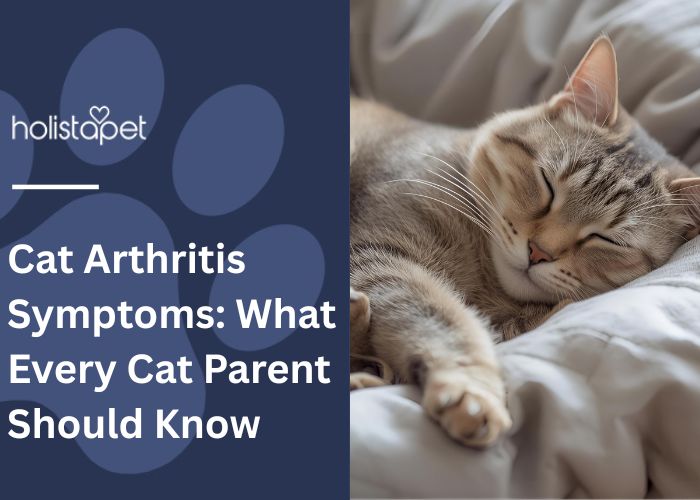
Cat arthritis symptoms often appear as small changes that are easy to miss, especially if your little hunter loves to hide discomfort. You may notice fewer graceful jumps, slower steps, or small shifts that affect every nap and cuddle.
Spotting these early clues gives you a better chance to help your kitty keep moving comfortably through the golden years. In this guide, you’ll learn what these changes may mean, what can cause them, and what steps to take next.
Key Highlights
- Stiffness and reduced jumping may signal arthritis.
- Grooming and litter box changes can reveal discomfort.
- Older cats face a higher risk, but younger cats can develop arthritis.
- A veterinarian can confirm the cause and recommend treatment.
- Home adjustments can make daily movement easier.
- Healthy weight and gentle activity support joint health.
- HolistaPet CBD products can complement a vet-guided wellness routine.
What Is Arthritis in Cats?

Arthritis in cats develops gradually as cartilage inside a cat’s joints wears down, limiting smooth movement. Osteoarthritis, also called degenerative joint disease, affects more than one area and may create bone spurs with a decreased range of motion.
Your feline bestie may move more cautiously long before obvious limping appears. This makes early detection valuable for timely veterinary care.
Early Cat Arthritis Symptoms
Early signs of arthritis in cats often appear during everyday routines instead of dramatic limps. Your playful explorer may still jump, climb, or chase toys but hesitate more often, land carefully, or end activities sooner than usual. Let’s break down these subtle changes below.
Changes in Jumping, Walking, and Climbing
Daily movement often reveals the earliest clues. Watch how your cat tackles familiar routes. Keep an eye out for these behaviors:
- Hesitate before jumping
- Pick lower resting spots or shorter paths
- Pull upward with the front legs
- Climb stairs slowly
- Take shorter steps
- Skip favorite high perches
Limping or stiffness after resting may never appear because both joints can hurt similarly. That makes reduced mobility harder to notice.
Reduced Play and Daily Activity
Some cats simply lose interest in their favorite games without showing obvious mobility problems. They may quit play sooner, spend extra time resting, or keep a little distance from other pets.
Lower activity can also contribute to weight loss and muscle loss, so watch out for those signs as well. Still, these clues do not confirm arthritis since other conditions cause similar behavior. For more warning behaviors, check out our warning signs your cat may be in pain guide.
How Arthritis Can Change a Cat’s Daily Routine

Arthritis can affect far more than walking or jumping. Your whiskered friend may groom differently, develop new bathroom habits, act less social, or react in unexpected ways. These subtle behavioral clues often appear before apparent physical changes.
Grooming and Coat Changes
A tidy coat often reflects how comfortably your kitty can move. If reaching the back or hindquarters becomes difficult, grooming may slip. You might notice greasy fur, mats, flakes, or decreased grooming activity. Some cats repeatedly lick sore areas instead.
Watch for unkempt coats or overgrown claws because both can hint at arthritis. Skin conditions can cause similar coat changes, so grooming alone cannot confirm the condition.
Litter Box Difficulties
Even reliable litter box habits can change when sore joints make everyday movements harder. Your little pouncer may hesitate before stepping inside. They may even adjust how they squat, miss the litter box, or eliminate nearby.
Cats may avoid high-sided litter boxes because climbing into them becomes painful. Do not quickly assume this behavior is intentional. Urinary conditions, constipation, or other medical problems can cause similar signs and require veterinary evaluation.
Hiding, Irritability, and Sensitivity to Touch
A friendly cat that suddenly keeps its distance could be telling you something. They may spend more time hiding, pull away from affection, or seem less interested in family activities.
Some cats hiss, swat, or flinch when a sore joint gets touched. Others resist being picked up because certain positions feel uncomfortable. Ongoing personality changes warrant a veterinary examination, even without visible mobility problems.
Cat Arthritis vs Normal Aging
Growing older naturally brings a few slower moments, extra naps, and quieter days. That said, your cat should not struggle with familiar routines simply because of age. Skipping a favorite perch, grooming less, or avoiding the litter box may point to discomfort instead.
Compare these changes with your cat's habits. Other age-related conditions can look similar, so consult your veterinarian for proper evaluation.
When Cat Arthritis Symptoms Need Veterinary Attention
Some changes should never wait. Schedule a veterinary visit if your cat shows ongoing arthritis signs, especially when they interfere with daily life.
- Persistent stiffness, reduced jumping, decreased grooming, or litter box problems
- Severe weakness, obvious injuries, or swollen joints needing prompt care
- Sudden paralysis, hind-leg dragging, or collapse requiring emergency treatment
Sudden appetite or energy changes may signal another health condition rather than arthritis.
What Causes Arthritis in Cats?
Arthritis can develop for several reasons, not just growing older. Genetics may also contribute alongside previous injuries, hip dysplasia, ligament damage, and everyday joint wear. Sometimes no single cause becomes clear. There's also the fact that muscle injuries and other joint conditions can mimic arthritis.
Which Cats Have a Higher Risk?
Arthritis is commonly diagnosed in middle-aged and older cats, but younger cats can develop it too. Previous fractures, joint injuries, hip dysplasia, and excess weight may increase the risk by placing extra strain on affected joints.
Genetics and joint structure may also play a role. Feline chin acne does not increase arthritis risk, but it can appear alongside unrelated health concerns. A risk factor alone never confirms arthritis in cats.
How Veterinarians Diagnose Cat Arthritis
Diagnosing arthritis begins with your home observations and a physical examination. Your veterinarian may watch your cat walk, turn, and shift position, then assess joint movement, muscle condition, posture, and sensitivity. Diagnostic imaging, including X-rays, may show cartilage loss or bone spurs, although findings may not match symptoms.
The Cornell Feline Health Center notes that regular veterinary visits help monitor arthritis progression. Veterinarians recommend a balanced diet for weight management and may suggest additional diagnostics to rule out injuries, neurologic conditions, or other possible causes.
Cat Arthritis Treatment and Management Options

Managing arthritis starts with individualized treatment options. Your veterinarian may prescribe medications for joint pain and inflammation, while recommending weight management, home adjustments, and controlled activity.
Some nonsteroidal anti-inflammatory drugs require careful monitoring and may be off-label for long-term treatment. Joint supplements, rehabilitation, laser therapy, or surgery may also help. The most effective way to protect your cat's quality of life depends on overall health.
Make Your Home Easier to Navigate
Small adjustments around your home can help keep your cat comfortable while they move through daily routines. Consider these practical changes:
- Low-entry litter box
- Stable ramps or pet steps
- Nonslip rugs on smooth floors
- Warm, supportive bedding
- Food and water within easy reach
- Lower perches or intermediate platforms
Keep pathways free of clutter, and check that every ramp or step stays secure under your cat's weight to help prevent slips and falls.
Support Healthy Weight and Gentle Movement
Keeping a healthy weight helps reduce unnecessary pressure on your cat's joints. If your furbaby carries excess weight, work with your veterinarian on a safe weight loss plan and appropriate portion sizes.
Gentle, low-impact play encourages joint health and muscle strength without overdoing it. Choose floor-level toys and easy-to-reach enrichment, then let your cat decide when to play and rest.
Natural Ways to Support Your Cat’s Joint Health
Natural approaches can become a helpful part of your cat's daily wellness routine when paired with veterinary guidance. Joint supplements containing essential fatty acids and other ingredients formulated for cats may promote joint health and comfortable movement.
Many pet parents include these products as part of long-term care. With consistent use, they may help aging kitties remain active, move more comfortably, and enjoy more playful moments throughout the day.
What to Know About CBD for Cats with Arthritis
Current research on CBD for feline arthritis is still developing, so expectations should remain realistic. CBD should never replace a veterinarian's diagnosis, prescribed pain relief, or recommended home modifications.
The FDA has not approved CBD as an arthritis treatment for cats. If your veterinarian recommends adding CBD, choose a cat-specific formula with clear serving guidance and third-party testing. HolistaPet offers quality CBD options for every cat's wellness routine.
HolistaPet CBD Options for Cats
Looking for simple ways to expand your cat's wellness routine? HolistaPet offers CBD oil for cats, soft chews, and flavorful CBD cat treats made with carefully selected ingredients. Every formula includes hemp seed oil, a natural source of Omega-3 and Omega-6 fatty acids, plus ECS support oil for cats to promote everyday feline wellness.
These products are well tolerated by many cats. HolistaPet formulas are non-GMO, vegan, and free from harsh additives or preservatives. Vet-approved and trusted by thousands of pet parents, they're a reliable choice.
How to Track Your Cat’s Mobility at Home
Keeping simple notes helps your veterinarian spot gradual joint changes that are easy to miss. Track:
- Jumping, walking, and stair use
- Grooming and litter box habits
- Playtime and social behavior
- Favorite sleeping locations
- Comfortable days and difficult days
Record short videos of familiar activities before appointments. Never press or force a sore joint to check your cat's reaction, as this may cause unnecessary discomfort.
FAQs About Cat Arthritis Signs
What Are the First Signs of Arthritis in Cats?
Common signs include hesitant jumping, stiffness after naps, reduced play, decreased grooming, and litter box difficulty. Many cats adjust how they move before stopping activities entirely. Lasting changes deserve a physical examination, even without an obvious limp.
Can Younger Cats Develop Arthritis?
Yes. Although feline arthritis occurs more often in older cats, younger cats may develop arthritis following an injury, ligament damage, or abnormal joint development. Hip dysplasia and excess weight may also increase the risk. A veterinarian can identify the underlying cause.
Can Arthritis in Cats Be Cured?
Osteoarthritis is a progressive condition that generally cannot be reversed. However, appropriate treatment can reduce pain, manage inflammation, and support a good quality of life. Veterinary care, home modifications, healthy weight support, and gentle movement all play useful roles.
Final Thoughts on Recognizing Cat Arthritis Symptoms
Cats often mask pain, making signs of arthritis challenging to recognize. Symptoms often begin with small changes that gradually affect your cat's daily routine. Hesitating before jumps, stiffness after resting, decreased grooming, and changing litter box habits are all worth discussing with your veterinarian. Early intervention gives your vet the best chance to identify the cause and recommend appropriate treatment options.
Discover more helpful cat care tips here.








Leave a comment
All comments are moderated before being published.
This site is protected by hCaptcha and the hCaptcha Privacy Policy and Terms of Service apply.