

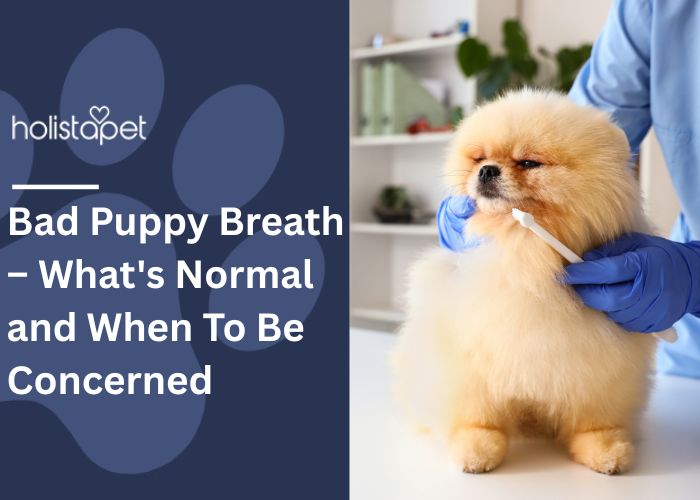
Puppy breath sometimes smells sweet, like a reminder of baby teeth and playful kisses. Other times, it can leave owners wrinkling their noses.
Pet parents often wonder if bad puppy breath is just a phase or a bigger sign. Knowing the root cause is the first step to take. Let's dig deeper.
Is Bad Breath in Puppies Common?

A puppy's breath often has a sweet smell, thanks to their mother's milk and early teeth. Still, bad breath can show up in a young pooch. Most pups get odd mouth odors as their teeth grow and change.
Sometimes, a dog's bad breath is harmless. Other times, it points to periodontal disease or other health problems. It pays to notice the differences early.
Why Does My Puppy's Breath Smell?
Foul-smelling canine breath may stem from simple growth changes or bigger issues. Below are the most common causes of bad breath in dogs:
- Teething and Natural Oral Changes
- Retained Baby Teeth or Dental Issues
- Diet and Chewing Habits
- Digestive Health and Gut Imbalances
Teething and Natural Oral Changes
A young dog's breath often changes while their baby teeth loosen and their adult teeth arrive. This teething stage can cause bad breath that comes and goes. Their mouth works hard as the gums adjust, leading to strange odors. Owners may also notice more chewing as relief. These natural changes usually pass as all the adult teeth settle.
Retained Baby Teeth or Dental Issues
Sometimes, a dog's teeth don't fall out on time, leaving baby teeth stuck next to adult teeth. This crowding can trap food and cause buildup. Bad breath may follow if bacteria grow in those tight spaces. Over time, pups can face gum or dental disease. Concerned pet parents should ask a veterinarian for advice.
Diet and Chewing Habits
What goes into a pup's mouth can shape the way their breath smells. Dog food, dental chews, or even toys leave their mark. Bad breath sometimes comes from dogs eating their own poop or nibbling on foreign bodies. Some owners also notice sour odors from certain dog chews. Watching a pup's eating habits can give clues.
Digestive Health and Gut Imbalances
Bad doggy breath can sometimes point to stomach troubles instead of teeth-related issues. It may come from queasiness, upset stomach, or other gut problems. When the digestive system struggles, odors escape through the mouth. Owners may notice discomfort or changes in appetite, too. A vet can help identify if the underlying cause of the foul smell lies beyond dental health.
When Bad Breath In Puppies Might Signal a Problem

A dog's breath smells different at various stages in their life. Shifts are normal as they age, though some odors can hint at real health issues. Here's when treating bad breath may require more than simple home remedies:
- Persistent Foul Odor
- Gum Redness, Swelling, or Bleeding
- Vomiting, Diarrhea, or Other Health Symptoms
Persistent Foul Odor
Bad breath that never fades often points to more than teeth-related changes. A foul smell that grows stronger over time can suggest periodontal disease, tartar buildup, or other dental issues. Some older dogs show this, too, but owners should not ignore it in young pets. Lingering odors may reveal an underlying cause that needs professional care.
Gum Redness, Swelling, or Bleeding
A puppy's mouth should look pink and healthy, not tender or red. Bad breath often pairs with gum changes that signal dental problems. Swelling, puffiness, or bleeding may follow tartar accumulation or poor oral care. Puppy owners should watch closely since untreated gum disease can harm not just teeth but overall health.
Vomiting, Diarrhea, or Other Health Symptoms
A pup's breath can shift if liver disease, kidney disease, or other health issues appear. Puppies with vomiting, diarrhea, or stomach troubles may also emit foul odors from the mouth. These changes can point to a serious underlying cause. Owners should take ongoing symptoms seriously and seek a vet's help. They can check the dog's liver, stomach, or other organs for problems.
When To See A Vet for Foul Puppy Breath
A pup's breath that turns sour and stays that way often means something more serious. It may be gum disease, digestive issues, or even oral tumors. Owners who notice lingering odors, gum changes, or other health issues should schedule a visit with a veterinary professional for answers and care.
Natural Ways To Freshen Your Puppy's Breath

A few simple steps can promote oral health in young puppies. They learn routines early, so starting small makes sense. Here are natural ways to help your furry friend:
- Regular Brushing and Dental Care
- Safe Chew Toys for Teething
- Fresh, Healthy Diet Choices
Regular Brushing and Dental Care
Daily brushing keeps bad breath under control and protects the teeth. Using canine toothpaste instead of human toothpaste helps avoid harm. A soft brush works well for a young dog's mouth and builds a healthy habit early. Pet parents who make brushing part of their pup's health routine see fresher kisses fast.
Safe Chew Toys for Teething
Safe dental chew toys can help reduce buildup and keep teeth stronger as they grow. Owners often notice less bad breath when chewing becomes part of playtime. These toys also distract from gnawing on furniture or shoes. Picking the right size and texture keeps this strategy effective.
Fresh, Healthy Diet Choices
The food a puppy eats can shape the way their breath smells each day. A poor-quality diet may cause bad breath or stomach troubles. Fresh ingredients and balanced meals support dental health and cut down odors. Some pet parents also add dental treats or chews for extra help.
HolistaPet Products for Foul Puppy Breath

A puppy's stinky breath can improve with natural wellness support. Good news: HolistaPet offers safe, clean options made just for our canine companions. Pick from:
- Fresh Breath Chews for Dogs. Natural blend with parsley, peppermint leaf, and probiotics that support oral health and reduce odor. Daily use helps with tartar buildup and keeps breath fresh.
- Fresh Breath Dental Sticks. Larger sticks for adult dogs, featuring natural ingredients and probiotics that support cleaner teeth and fresher breath.
FAQs – Bad Breath in Puppies
Puppy owners often wonder about their pet's breath during the early months. Most dogs have some odd odors as their mouths grow. Other dogs may not exhibit the same. Still, it pays to be vigilant. Here are quick answers to common questions about a young puppy's breath.
Is bad breath in puppies normal during teething?
Yes, foul puppy breath is common while teething. A puppy's mouth works hard as baby teeth loosen and adult teeth push through. This change can leave odd smells that fade once new teeth settle in. Owners may also notice more chewing during this stage.
Can puppy food cause smelly breath?
Yes, certain foods can cause bad breath. Strong ingredients or poor-quality formulas may leave odors in a puppy's mouth. The smell sometimes reflects how well the food supports digestion and oral health. Owners may see improvement with balanced meals. Fresh food with clean ingredients often reduces unpleasant odors and keeps the pet healthier overall.
How can I safely freshen my puppy’s breath?
Bad breath often improves with simple daily care. Owners can brush their puppy's teeth with canine toothpaste and use dental chews for extra help. Safe chew toys also keep a pup's breath smell cleaner while easing teething discomfort. Fresh food choices add another boost. These small steps preserve mouth health and keep every puppy kiss much sweeter.
Should I change my puppy’s food if their breath stinks?
Sometimes, puppy bad breath connects to what the dog eats. Food that's too rich or low in quality may leave odors in the mouth. A switch to balanced meals with fresh ingredients can often help. Puppy parents should choose food that supports oral health and digestion. Cleaner food choices may reduce foul breath and improve overall wellness at the same time.
Final Thoughts – Keeping Puppy Breath Fresh and Healthy
Puppy bad breath may be part of growing up, but it can also signal bigger issues. Owners who stay alert to changes can protect their companion's health. Daily brushing, safe chew toys, and balanced meals all help.
For extra support, HolistaPet offers Fresh Breath Chews and Dental Sticks. These give both puppies and older dogs a natural boost toward fresher, healthier kisses.
 CBD Oil for Dogs - Fast Acting
 Chicken Flavored CBD Oil For Dogs - Easy Dose
 Salmon Flavored CBD Oil For Dogs - Highly Rated
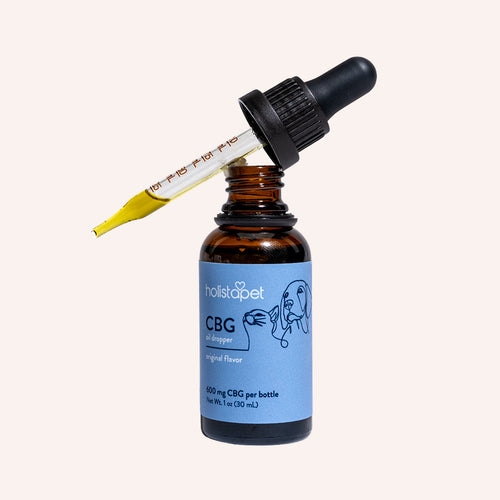 CBG Oil for Dogs and Cats - Loved by Thousands









Leave a comment
All comments are moderated before being published.
This site is protected by hCaptcha and the hCaptcha Privacy Policy and Terms of Service apply.