

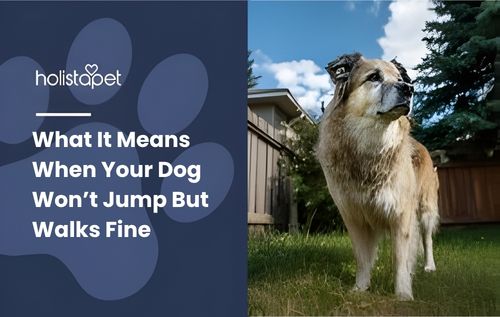
A dog that stops jumping but still walks fine usually deals with pain. Jumping puts more strain on joints and muscles than walking. That shift often points to injury, joint issues, or discomfort that needs attention.
Why Does My Dog Walk Fine But Won’t Jump?
A dog that walks fine but refuses to jump usually feels pain during high-impact movement. Jumping stresses joints, muscles, and the spine more than walking, so even mild issues can stop that action first.
1. Joint Pain or Arthritis
Joint inflammation makes jumping uncomfortable. Walking keeps pressure low, but jumping forces joints to absorb impact. Early arthritis or mild joint strain often shows up this way. The American Kennel Club explains that arthritis commonly reduces mobility and makes high-impact movement difficult for affected dogs
Related Post: Best CBD Oil for Dogs With Arthritis: Comfort & Support for Stiff Joints
2. Soft Tissue Injury
A minor sprain or muscle strain can limit movement. Dogs may still walk without obvious limping, but avoid jumping because it requires more القوة and extension.
3. Back or Spinal Issues
Spinal discomfort, including disc problems, can make jumping painful. Walking stays manageable, but jumping adds pressure along the spine, which triggers avoidance.
4. Paw or Nail Injury
Small injuries like a torn nail or sore paw pad can go unnoticed during walking. Jumping increases pressure on the feet, which can cause pain and hesitation.
5. Fear After a Bad Experience
A slip or fall can create hesitation. Even without physical pain, a dog may avoid jumping due to learned fear while still walking normally.
6. Age-Related Changes
Older dogs lose strength and flexibility. They may choose safer movements like walking and avoid actions that require more effort or balance.
7. Early Signs of Hip or Knee Problems
Hip dysplasia and ligament strain often begin with subtle changes that appear before obvious limping develops. Dogs may still walk but avoid jumping because it puts more strain on affected joints.
How Can You Help a Dog That Won’t Jump Normally?

Help the dog by reducing pain, supporting joints, and rebuilding strength. Start with simple changes at home, then add targeted support if needed.
|
Focus Area |
What to Do |
Why It Helps |
|
Movement Control |
Use ramps and limit jumping |
Prevents further strain |
|
Health Check |
Inspect joints and consult a vet |
Identifies hidden issues early |
|
Joint Support |
Add supplements and omega 3 |
Reduces inflammation |
|
Strength Building |
Gradual exercise progression |
Restores mobility safely |
|
Pain Management |
Use CBD from HolistaPet |
Supports comfort and recovery |
|
Home Setup |
Improve traction and resting areas |
Reduces injury risk |
|
Progress Tracking |
Monitor behavior changes |
Guides recovery decisions |
Limit Strain and Support Movement
Reduce activities that stress joints while recovery starts.
- Block access to high furniture
- Use ramps or pet stairs
- Keep walks short and controlled
- Avoid rough play or sudden jumps
Check for Injury Early
Pain often hides during normal walking. A quick check helps catch problems sooner.
- Look for swelling, limping, or sensitivity
- Gently feel joints and paws for reactions
- Visit a vet if behavior lasts more than a few days
The American Kennel Club notes that early detection of joint or soft tissue issues improves recovery outcomes.
Support Joint Health
Strong joints help restore normal movement.
- Add glucosamine and chondroitin
- Include omega 3 fatty acids for inflammation
- Maintain a healthy weight to reduce pressure
A study published in the Journal of Veterinary Pharmacology and Therapeutics found that omega 3 fatty acids can reduce joint inflammation and improve mobility in dogs.
Build Strength Gradually
Controlled exercise helps dogs regain confidence and ability.
- Start with slow leash walks
- Add gentle incline walking
- Introduce low step ups before full jumping
- Keep sessions short and consistent
Use CBD for Pain and Recovery
CBD can support comfort and mobility when used correctly. A company named HolistaPet produces broad-spectrum CBD products formulated for pets that may support mobility and daily comfort.
- CBD Dog Treats for Joint and Mobility Care support daily comfort
- CBD Oil for Dogs allows flexible dosing for targeted relief
- Capsules offer consistent intake for ongoing support
Research from Cornell University found that CBD oil helped increase comfort and activity levels in dogs with joint discomfort.
When Should a Dog See a Vet for Jumping Problems?

Go to the vet if the dog refuses to jump for more than a few days or shows signs of pain, even if you’re already using joint support soft chews for mobility relief. Delaying care can turn a minor issue into a serious condition.
Watch for clear warning signs that need prompt attention.
- Limping or favoring one leg
- Whining, yelping, or signs of discomfort
- Swelling in joints, paws, or limbs
- Stiffness after rest that does not improve
- Sudden behavior changes like hiding or irritability
Seek urgent care if symptoms escalate quickly.
- Loss of balance or coordination
- Dragging a leg or weakness in the back legs
- Refusal to walk, eat, or move
- Signs of severe pain when touched
A vet can perform a physical exam, check joint function, and recommend imaging like X-rays if needed. Early diagnosis helps target the exact cause and speeds up recovery.
How Can Mobility Problems That Affect Jumping Be Managed Safely?
A dog that avoids jumping often signals early discomfort that benefits from attention. Supportive home adjustments, gradual strengthening routines, and early veterinary evaluation improve recovery outcomes and reduce long-term mobility risks. Learning more about joint support strategies and mobility care options can help maintain comfortable movement as dogs age.
Frequently Asked Questions
Can a dog recover from jumping issues without treatment?
Some mild cases improve with rest, but untreated pain or injury can worsen. Proper care speeds up recovery and prevents complications.
Does breed affect jumping ability problems?
Yes. Large breeds face higher risk of joint issues, while small breeds often deal with knee problems like patellar luxation.
Can weight affect a dog’s ability to jump?
Excess weight adds stress to joints and muscles. Dogs with extra weight often avoid jumping due to discomfort.
Should jumping be trained again after recovery?
Yes. Gradual reintroduction helps rebuild strength and confidence. Start low and increase height slowly.
Can slippery floors stop a dog from jumping?
Yes. Poor traction makes dogs feel unstable. Many avoid jumping to prevent slipping or injury.
Is hesitation to jump always a health issue?
Not always. Some dogs develop caution after a bad experience. Still, rule out pain before assuming behavior alone.
 CBD Oil for Dogs - Fast Acting
 Chicken Flavored CBD Oil For Dogs - Easy Dose
 Salmon Flavored CBD Oil For Dogs - Highly Rated
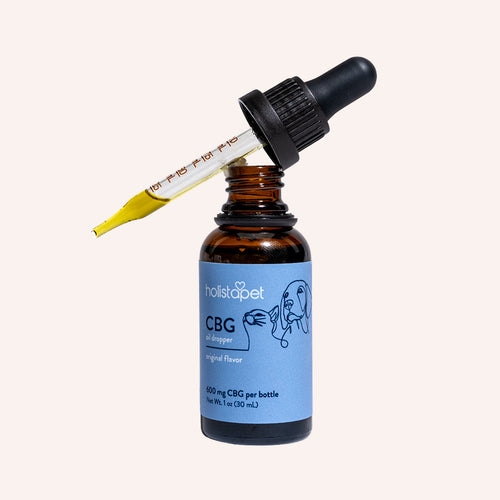 CBG Oil for Dogs and Cats - Loved by Thousands










Leave a comment
All comments are moderated before being published.
This site is protected by hCaptcha and the hCaptcha Privacy Policy and Terms of Service apply.