

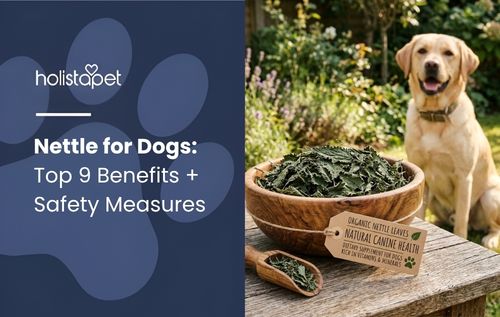
Nettle (Urtica dioica), also known as stinging nettle, is a nutrient-rich herb sometimes included in dog supplements. It contains vitamins A, C, and K, plus minerals like iron, magnesium, and calcium.
In pet-safe forms, nettle may support overall wellness, especially skin condition, immune function, and normal inflammatory responses. Pet owners focused on caring for your dog naturally often look to herbal supplements like nettle as part of a broader daily routine.
Is Nettle Useful for Dogs?
Nettle contains naturally occurring compounds such as flavonoids (including quercetin) and antioxidants that are being studied for their role in supporting normal immune and inflammatory responses.
When included in pet-safe formulations, nettle may help support:
- Normal immune system function
- Skin and coat condition
- Seasonal allergy comfort — some pet owners also combine nettle with dog CBD oil as part of a broader seasonal wellness routine, based on research such as this AKC: CBD Oil for Dogs — What You Need to Know overview
- Digestive balance
While it is not a treatment for disease, it is sometimes used as part of a broader wellness approach for dogs.
Can Nettle Be Harmful or Toxic to Dogs?
Nettle should be used with caution. The raw plant contains fine hairs that can cause temporary irritation when touched or ingested.
Potential concerns include:
- Mouth or skin irritation from raw contact
- Digestive discomfort if consumed in large amounts
- Possible interactions with certain medications
- Not recommended for pregnant or nursing dogs without veterinary advice
Because of these factors, only pet-formulated nettle products should be used.
A veterinarian should be consulted before introducing nettle, especially if the dog has existing health conditions or is on medication.
What Happens If a Dog Eats Raw Nettle?
If a dog eats raw stinging nettle, mild irritation may occur. This may include:
- Drooling
- Mouth sensitivity
- Mild stomach discomfort
- Temporary restlessness
Symptoms are usually temporary. Provide water and monitor the dog. Seek veterinary help if symptoms persist.

What Nettle Uses Are Safe for Dogs?
Nettle is generally considered safer when processed into dog-friendly formats that remove the stinging components.
1. Supplements (Capsules or Powders)
Nettle is often included in powdered or capsule form and can be added to food. These formulations are designed for easier and safer consumption.
2. Dried Leaf Additives
Dried nettle leaf may be sprinkled in small amounts over meals, depending on product guidance.
3. Teas or Infusions
Some pet owners use cooled nettle tea as a mild addition to food or hydration routines. Only diluted and properly prepared infusions should be used.
4. Topical Products
Nettle may be included in pet-safe creams or balms intended to support normal skin condition and comfort.
Top 9 Ways Nettle Benefits Dogs
Nettle is sometimes included in wellness routines for its broad nutritional profile. It may support several normal body functions:
1. Skin and Coat Condition
May help support a healthy-looking coat and skin balance.
2. Immune System Function
Contains antioxidants that may support immune system activity.
3. Seasonal Allergy Comfort
May help support normal histamine response during seasonal changes. Some pet owners pair nettle with hemp-infused dog treats to further support their dog's comfort during high-pollen periods.
4. Digestive Function
May support healthy digestion and nutrient absorption. Adding dog probiotic soft chews alongside nettle may offer additional support for gut balance and microbiome health.
5. Urinary Tract Support
Traditionally used to support normal urinary flow and flushing processes.
6. Normal Inflammatory Response
May help maintain comfort during everyday physical activity.
7. Respiratory Comfort
May support general respiratory wellness during environmental exposure.
8. Circulatory Function
Contains nutrients that contribute to overall circulatory health support.
9. General Nutritional Support
Provides vitamins and minerals that contribute to overall wellness. For broader nutritional coverage, dog multivitamin chews can complement an herbal supplement like nettle in a daily routine.
How to Choose Safe Nettle Products for Dogs
When selecting any herbal supplement, quality and safety are important.
Look for:
- Clearly labeled pet-specific formulations
- Transparent ingredient sourcing
- Products made under good manufacturing practices
- Veterinary guidance or review where available
- Simple formulations without unnecessary additives
Avoid products with unclear dosing instructions or unknown sourcing.
Dog-Safe Nettle Product Considerations
When selecting nettle-based products for dogs, formulation quality and clear usage instructions are important factors to consider. Because nettle can vary in potency and preparation, pet-specific products are generally preferred over raw or unregulated forms.
Pet owners may encounter nettle in different formats such as supplements, powdered blends, or topical preparations. These products are typically designed to reduce the risk of irritation and ensure more controlled usage.
When evaluating nettle products, it may be helpful to look for the following characteristics:
- Clearly labeled use for dogs or pets
- Defined ingredient lists with transparent sourcing
- Simple formulations without unnecessary additives
- Dosage guidance appropriate for a dog’s weight and size
- Manufacturing standards that follow basic quality control practices
Some dog supplements may combine nettle with other herbs or nutrients intended to support general wellness, such as digestion or skin condition. These combinations vary by product and should be reviewed carefully based on the dog’s individual needs.
As with any supplement, it is recommended to consult a veterinarian before adding nettle to a dog's routine, especially if the dog has existing health conditions or is taking medication. For further reading on supplement safety research, the PubMed: Pharmacokinetics, Safety, and Clinical Efficacy of CBD in Dogs study offers useful context on how compounds are evaluated in canines.

How To Use Nettle for Your Dog
Nettle may be included in a dog’s routine in several ways:
Supplements
Added to food based on product dosing instructions or veterinary guidance.
Food Additives
Small amounts of dried nettle may be mixed with meals when appropriate.
Teas
Cooled and diluted infusions may be used occasionally in small portions.
Topical Use
Creams or balms may be applied externally to support skin comfort.
Bath Additives
In some cases, diluted herbal infusions may be added to baths for topical comfort support.
Precautions When Using Nettle
Even though nettle is natural, it still requires responsible use.
Key precautions include:
- Monitor for sensitivity or allergic reactions
- Avoid raw plant exposure
- Do not exceed recommended dosages
- Consult a veterinarian before use with medications
- Avoid use in pregnant or nursing dogs unless approved
Discontinue use if any unusual symptoms appear. Similar Post: Dandelion for Dogs: Benefits, Uses, & Safety Measures | Also see: what dog has the shortest lifespan and how breed health factors into supplement needs.
Can You Prepare Fresh Nettle at Home?
Fresh nettle must be properly processed (e.g., blanched) to reduce irritation. However, commercial pet-safe products are generally safer due to controlled dosing and preparation.
Final Thoughts
Nettle is a nutrient-rich herb that may support general wellness in dogs when used appropriately. It is most effective and safest when included in properly formulated pet products with clear dosing instructions.
As with any supplement, individual needs vary. Consulting a veterinarian before adding nettle to a dog's routine helps ensure safe and appropriate use. Active and working dogs such as those involved in duck dog training may have different nutritional demands that make herbal supplementation especially relevant.






Leave a comment
All comments are moderated before being published.
This site is protected by hCaptcha and the hCaptcha Privacy Policy and Terms of Service apply.