


Worms can affect pets and people, often showing up through subtle signs like abdominal pain, digestive issues, or even visible worms. Many cases start from contaminated food, soil, or poor hygiene, which makes intestinal worm infections more common than expected.
This guide covers practical home remedies for worms and simple steps to treat intestinal worms naturally while protecting the household from further infection.
Key Takeaways
- Dog worms include roundworms, tapeworms, hookworms, whipworms, and heartworms, and each requires a different treatment approach.
- Veterinary dewormers remain the safest and most effective way to treat active worm infections.
- Home remedies for worms in dogs may support recovery but should not replace prescribed treatment.
- Regular deworming, flea control, and good hygiene help reduce the risk of future infections.
- Contact a primary veterinarian if symptoms become severe, persist, or affect puppies, senior dogs, or pregnant or lactating dogs.
What are the Common Worm Problems in Dogs?
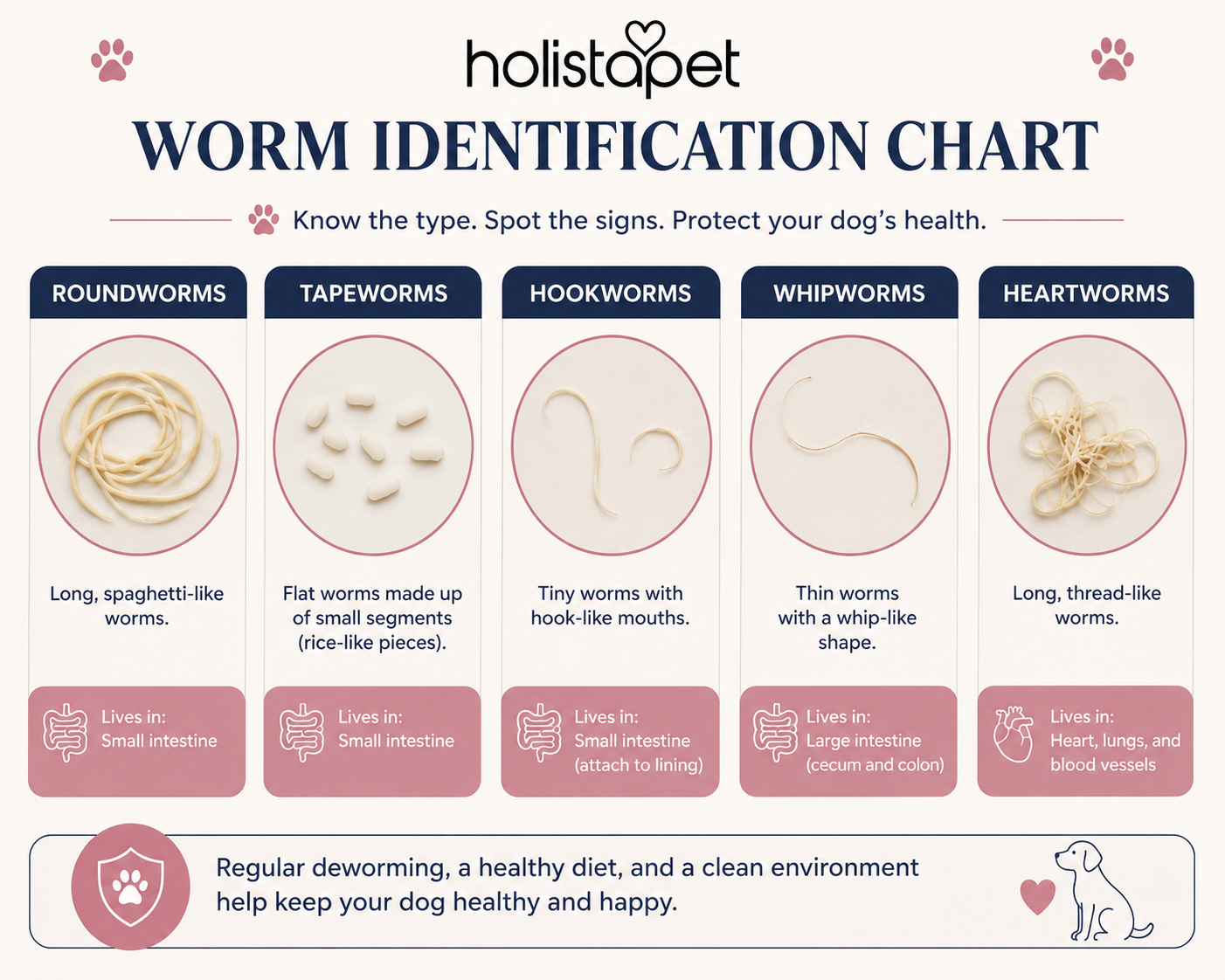
The most common dog worms include roundworms, tapeworms, hookworms, whipworms, and heartworms. Each parasite affects a different part of the dog's body, causes different symptoms, and requires prompt treatment to protect the dog's health.
Roundworms
Roundworms live in the dog's digestive tract and often affect puppies and adult dogs. They may appear as long, white, spaghetti like worms in stool or vomit. Some species can also spread to people through contaminated soil or feces, so proper hygiene matters.
Common signs:
- Potbellied appearance
- Vomiting
- Diarrhea
- Poor growth in puppies
- Weight loss
- Dull coat
How it spreads:
- From the mother before birth
- Through nursing
- Swallowing eggs from contaminated soil
- Eating infected rodents or other prey
Tapeworms
Tapeworms attach to the dog's intestines and absorb nutrients from the dog's food. Small rice like segments often appear in the stool or around the anus after they break away. People face a low risk, but infection can occur after accidentally swallowing an infected flea.
Common signs:
- Scooting
- Licking the rear end
- Mild weight loss
- Visible worm segments near the anus or bedding
How it spreads:
- Swallowing infected fleas during grooming
- Eating infected prey animals
Hookworms
Hookworms attach to the lining of the dog's digestive tract and feed on blood. They rarely appear in stool because they stay attached inside the intestines. Some hookworm species can infect people through skin contact with contaminated soil.
Common signs:
- Pale gums
- Bloody or dark stool
- Weakness
- Weight loss
- Anemia
How it spreads:
- Swallowing larvae from contaminated soil
- Larvae entering through the skin
- Nursing from an infected mother
Whipworms
Whipworms live in the large intestine and can cause long term irritation. They usually do not appear in stool because they remain attached to the intestinal wall. The risk to people remains very low.
Common signs:
- Chronic diarrhea
- Blood or mucus in stool
- Weight loss
- Dehydration
- Reduced appetite
How it spreads:
- Swallowing eggs from contaminated soil
- Contact with contaminated food or water
Heartworms
Heartworms live in the heart and lungs instead of the intestines. They do not appear in stool because mosquitoes spread them directly into the bloodstream. Dogs can develop serious heart and lung disease if left untreated. Although mosquitoes can carry heartworms to people, human infections remain rare and usually do not develop into the same disease seen in dogs.
Common signs:
- Persistent cough
- Exercise intolerance
- Difficulty breathing
- Weight loss
- Collapse in advanced cases
How it spreads:
- Bites from infected mosquitoes
Related Post: 8 Home Remedies for Fleas on Dogs: Natural Ways to Help Get Rid of Fleas
What Kills Worms in Dogs Instantly?
No medication kills all dog worms instantly. The right treatment depends on the type of parasite, the dog's body weight, age, and overall health. A primary veterinarian can identify the parasite and recommend the appropriate treatment plan.
Most deworming medications start working within hours, but the dog's body needs time to remove the parasites. Some dogs pass worms in their stool within one or two days, while others do not show visible worms because the parasites break down inside the dog's digestive tract.
Common medications include:
- Pyrantel pamoate for roundworms and hookworms
- Fenbendazole for roundworms, hookworms, and whipworms
- Praziquantel for tapeworms
- Milbemycin oxime for intestinal worms and heartworm prevention
- Moxidectin for heartworm prevention
What are the Best Home Remedies for Dog Worms?
Similar to medication, no home remedies for worms in dogs can eliminate an active worm infection or kill parasites instantly. Veterinary dewormers remain the safest and most effective treatment.
Some natural worm treatments may support the dog's gut health and recovery, but they should only complement a veterinarian approved treatment plan, not replace it.
|
Remedy |
Key Function |
Best For |
Evidence Level |
|
Raw garlic |
Damages parasites |
Early infection, digestive issues |
Moderate |
|
Pumpkin seeds |
Paralyzes worms |
Roundworms, taenia species |
Moderate |
|
Papaya seeds |
Breaks down parasites |
Mild infections |
Limited |
|
Coconut oil |
Supports gut health |
Recovery support |
Limited |
|
Apple cider vinegar |
Alters gut environment |
General support |
Limited |
|
Raw carrots |
Improves bowel movement |
Prevent reinfection |
Low |
|
CBD |
Supports ECS and inflammation |
Symptom management |
Emerging |
1. Raw Garlic for Antiparasitic Action
Raw garlic remains one of the most studied natural remedies due to its antimicrobial properties. It is known for anti-parasitic properties but should be used in moderation due to potential toxicity.
- Contains allicin which damages parasite cell membranes and slows growth
- Helps eliminate worms and reduce parasitic infections in the intestines
- Best taken raw to preserve active compounds
- Supports immune response in infected individuals
This approach works well for early symptoms like abdominal pain or digestive issues.
Related Product: Melatonin for Dogs
2. Pumpkin Seeds to Paralyze Worms
Pumpkin seeds target intestinal parasites by weakening their grip inside the human intestines.
- Rich in cucurbitacin which paralyzes worms
- Helps expel worms through regular bowel movements
- May assist in removing worm eggs when combined with fiber intake
- Often used for roundworms and taenia species
Some studies suggest cucurbitacin can impair parasite mobility, making removal easier.
3. Papaya Seeds for Digestive Cleansing
Papaya seeds contain papain, which may support the removal of intestinal parasites and improve digestive health.
- Contains enzymes that break down parasite proteins
- May reduce intestinal worm infections based on small clinical findings
- Helps relieve symptoms like bloating and unexplained weight loss
- Easy to mix with food or drinks
This option works as part of dietary changes to treat intestinal worms naturally.
4. Coconut Oil and Coconut Water Support
Coconut products support gut balance but should not replace proper treatment.
- Pure coconut oil contains compounds with antimicrobial properties
- Coconut water supports hydration and digestive function
- Helps maintain gut balance in weakened immune systems
- Useful for recovery and general digestive support
5. Apple Cider Vinegar for Gut Environment
Apple cider vinegar helps create an alkaline environment that make survival harder for parasites.
- Supports digestive system balance
- May help get rid of worms by altering gut pH
- Works well with other home remedies
- Helps reduce digestive issues
6. Fiber Rich Foods Like Raw Carrots
Fiber helps move parasites out of the intestines and improves digestion.
- Raw carrots support bowel regularity
- Helps eliminate worms and waste buildup
- Supports preventing worms through better gut health
- Assists in clearing visible worms from stool
7. CBD Support
CBD interacts with the endocannabinoid system which regulates immune response and digestive function, making it useful for managing symptoms linked to worm infestation.
- Helps reduce inflammation caused by parasitic infections
- Supports digestive system balance and gut stability
- May ease discomfort such as abdominal pain
- Holistapet offers targeted products that align with this approach.
- Organic CBD dog treats for digestive health support gut balance in pets
- CBD Capsules provide consistent support for ongoing care
These options work best as supportive care alongside proper treatment.
Can I Deworm My Dog Myself?

Yes, dog owners can give an over the counter dewormer at home for common intestinal worms, but only after choosing the correct medication for the specific parasite. Using the wrong product may fail to treat the infection and delay proper care.
Before treating a dog at home, consider:
- The type of worm
- The dog's body weight for accurate dosing
- The dog's age and overall health
- Special care for pregnant or lactating dogs
A primary veterinarian should evaluate puppies, sick dogs, pregnant dogs, lactating dogs, or dogs with severe symptoms. If symptoms continue after treatment or return later, follow up with a veterinarian for testing and an updated treatment plan.
How to Prevent Worms in Dogs?
Preventing worms in dogs starts with good hygiene, routine veterinary care, and a healthy lifestyle that reduces exposure to internal parasites.
- Follow a regular deworming schedule: Use veterinarian recommended products based on your dog's age, lifestyle, and risk.
- Practice flea control: Prevent fleas to reduce the risk of tapeworm infections.
- Clean up feces promptly: Remove waste from the yard to limit contamination.
- Provide clean food and water: Keep the dog's food and dog's water free from contamination.
- Feed a healthy diet: Support the dog's immune system and dog's gut health with balanced nutrition.
- Prevent hunting and scavenging: Limit access to rodents, wildlife, and raw carcasses that may carry parasites.
- Schedule regular fecal exams: Do this at least three times a year to detect worms early before they affect the dog's health.
- Maintain a clean living environment: Wash bedding, food bowls, and shared areas regularly to reduce parasite exposure.
When Do I Take My Pet to the Vet for Worms?

Take a pet to the vet for worms when symptoms become persistent or severe. Home remedies may help mild cases, but advanced infections need medical treatment.
Key signs that require vet care:
- Visible worms in stool or around the anus.
- Bloody stools or ongoing digestive issues.
- Unexplained weight loss or low appetite.
- Abdominal pain or bloating.
- Intense itching or scooting caused by irritation.
Immediate attention is important for young pets, older animals, or those with weakened immune systems. These groups face higher risk from parasitic infections.
Veterinarians identify the specific parasites and provide prescription medications that eliminate worms and their eggs more effectively. Early treatment also helps prevent reinfection and limits spread to other pets and family members.
Related Post: 7 Natural Home Remedies for Dog Mange and How to Apply Them
Frequently Asked Questions
Can worms spread from pets to humans?
Yes, some worms can spread to humans. Transmission happens through contaminated soil, food, or contact with infected pets. Good hygiene lowers the risk.
How do pets get intestinal worms?
Pets get worms from contaminated sources. Common causes include undercooked meat, soil exposure, and contact with infected animals or fleas carrying eggs.
How long does it take to get rid of worms in pets?
It depends on the infection. Mild cases clear in days, while severe cases take weeks and need repeated treatment.
Can worms come back after treatment?
Yes, reinfection is common. Eggs can remain in the environment, so cleaning and preventive measures are essential.
What are the first signs of worms in pets?
Early signs affect digestion and behavior. Look for digestive issues, weight loss, and visible worms in stool.
Are natural remedies enough to treat worms?
No, they are not enough alone. Natural remedies support recovery, but medical treatment is needed for full removal.
Deal with Worms the Best Way
Worms spread easily through contaminated food, soil, and poor hygiene, but early action makes a big difference. Use home remedies for worms for mild cases, maintain good hygiene practices, and seek medical treatment when symptoms worsen.
Consistent care helps eliminate worms, protect the digestive system, and prevent reinfection for both pets and family members.








4 comments
Paula may
If don’t have any of them things to give her
Stacey Lea Trammell
Thank you for the holistic remedies.
Stacey Trammell
Rebecca
Are squash pumpkin seeds as effective as the pumpkin in USA? I’m in UGANDA and what they call pumpkin is not the same as America ???
Renee
Thank you for the information on worms in dogs. The home remedies are simple & affordable ways of keeping my dogs happy & healthy.
Leave a comment
All comments are moderated before being published.
This site is protected by hCaptcha and the hCaptcha Privacy Policy and Terms of Service apply.