


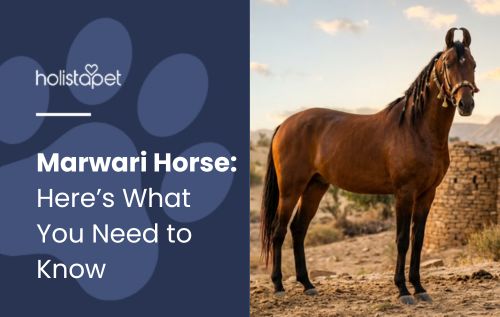
The Marwari horse stands out for its distinctive inward curving ears, endurance, and deep connection to Indian history. This rare breed from the Marwar region of India thrives in hot climates, handles long distances with ease, and forms strong bonds with handlers.
Learn what makes the Marwari horse breed unique, including its care needs, health concerns, temperament, and role in modern equestrian sports.
What is the Marwari Horse?
|
Breed Summary |
Details |
|
Origin |
Marwar region of India |
|
Breed Type |
Indigenous horse breed |
|
Average Height |
Medium-sized at 14 to 16 hands |
|
Distinct Features |
Curved ears, slightly Roman profile, thin skin |
|
Traditional Role |
Cavalry horse |
|
Common Colors |
Grey horses, black horses, skewbald horses |
|
Modern Uses |
Endurance riding, dressage, equestrian sports |
|
Climate Adaptation |
Well-suited for hot climates |
The Marwari horse is a rare breed from the Marwar region of India in Western India. Breeders developed this horse breed for warfare, endurance riding, and travel across harsh desert terrain.
Rajput warriors valued the Marwari breed for its stamina, loyalty, and ability to withstand intense heat over long distances. Its most recognizable feature comes from its distinctive inward curving ears, which often touch at the tips.
Research studies on indigenous horse breeds show that the Marwari maintains distinct genetic diversity compared to other equine breeds in India.
According to Francesca Kelly of the Marwari Horse Society, preservation efforts helped revive the breed after decades of poor breeding practices reduced its population.
Today, many Marwari horses compete in equestrian sports such as dressage and endurance races while breeders continue protecting breed standards through the Horse Society of India and other organizations.
What are the Marwari Horse’s Characteristics?
 The Marwari horse combines endurance, agility, and a distinctive appearance that sets it apart from other Indian horse breeds. This unique breed also shows strong adaptability to hot climates and demanding terrain.
Physical Traits
The Marwari horse breed has a lean yet muscular frame built for endurance riding and long distances. Its most recognizable feature comes from its distinctive inward curving ears.
-
Medium-sized build with an average height of 14 to 16 hands
-
Sloping shoulders that support a smooth ride
-
Slightly Roman facial profile
-
Thin skin with a noticeable metallic sheen
-
Strong legs suited for endurance races
-
Ears that curve inward and sometimes touch at the tips
-
Ability to withstand intense heat in Western India
Breed Colors
Breeders recognize several coat colors within the Marwari breed. Some colors hold cultural importance in Indian culture and Indian history.
-
Grey horses
-
Black horses
-
Skewbald horses
-
Horses with white socks and facial markings
-
Solid and patterned coat variations
Temperament
The Marwari develops strong bonds with handlers and responds well to proper training and consistent training routines.
-
Intelligent and alert temperament
-
Loyal nature linked to its cavalry horse history
-
Well-suited for various disciplines in equestrian sports
-
Calm under pressure during endurance riding
-
Energetic without becoming difficult to manage
How Do I Care for a Marwari Horse?
 The Marwari horse needs consistent care focused on nutrition, hydration, exercise, hoof maintenance, and preventive health support. This horse breed handles hot climates well, but proper management still plays a major role in long-term well-being and performance.
Feeding and Nutrition
The Marwari performs best with a balanced diet that supports endurance, muscle recovery, and digestive health.
-
Provide high-quality hay and controlled grain portions
-
Maintain good nutrition with added vitamins and minerals when needed
-
Supply fresh water at all times, especially in intense heat
-
Adjust the horse's nutrition based on workload and age
-
Avoid overfeeding to reduce joint strain and metabolic health issues
Exercise and Training
This breed thrives with regular movement and structured routines. Consistent training helps maintain stamina and mental focus.
-
Use proper training suited for endurance riding or various disciplines
-
Include daily turnout and controlled exercise sessions
-
Avoid sudden workload increases during endurance races
-
Monitor recovery after long distances or heavy activity
-
Use gradual conditioning for young horses
Grooming and Hoof Care
Thin skin and active lifestyles make routine grooming important for Marwari horses.
-
Brush daily to remove sweat and dirt buildup
-
Check curved ears regularly for irritation or debris
-
Clean hooves to prevent cracks and infections
-
Schedule farrier visits every six to eight weeks
-
Watch for cuts or skin sensitivity in hot climates
Living Environment
The Marwari adapts well to warm regions but still requires clean and safe housing conditions.
-
Provide shaded shelter with airflow
-
Keep bedding dry and free from dust
-
Allow space for movement and social interaction
-
Reduce stress through regular schedules and handling
-
Separate aggressive horses when necessary to prevent injuries
Does the Marwari Horse Have Health Issues?
The Marwari horse stays healthy and resilient overall, but some horses develop health issues linked to poor breeding practices, heavy workloads, and inadequate care.
-
Dehydration: Endurance riding and intense heat increase the risk of fluid loss without enough fresh water.
-
Joint strain: Long distances and demanding equestrian sports can stress joints and tendons over time.
-
Digestive problems: Sudden diet changes or poor horse's nutrition may trigger colic and stomach discomfort.
-
Hoof cracks and infections: Dry climates and inconsistent hoof care can weaken hoof condition.
-
Skin sensitivity: Thin skin makes some horses more vulnerable to irritation, sun exposure, and insect bites.
-
Dental issues: Uneven tooth wear may affect chewing, weight maintenance, and overall well-being.
-
Reduced genetic diversity: Limited breeding populations within this rare breed can increase inherited health concerns.
-
Heat stress: Even though the breed can withstand intense heat, overwork without recovery still creates health risks.
Related Post: Best Home Remedies for Horse Colic [Full List]
How Do I Provide Nutritional Support for a Marwari Horse?
 The Marwari horse needs a balanced diet, steady hydration, and targeted supplements to support endurance, muscle recovery, digestion, and overall well-being. Proper nutrition also helps this horse breed handle long distances and intense heat more efficiently.
Core Diet Requirements
The Marwari breed performs best on nutrient dense forage with controlled concentrate intake.
-
Feed high quality hay as the main food source
-
Add grains based on workload and activity level
-
Maintain good nutrition with proper vitamin and mineral balance
-
Provide fresh water throughout the day
-
Increase electrolytes during endurance riding and hot climates
According to equine nutrition researchers at the University of Kentucky, horses performing endurance races require higher electrolyte and hydration support to reduce fatigue and recovery problems.
Protein and Energy Support
Active Marwari horses need enough protein and calories to maintain muscle condition without excessive weight gain.
-
Use protein-rich feeds for horses involved in various disciplines
-
Include healthy fats for steady energy release
-
Avoid sudden feed changes that may trigger digestive issues
-
Monitor body condition regularly during training seasons
Digestive and Joint Health
Long distance work can stress digestion and joints in many Marwari horses.
-
Add probiotics to support gut health
-
Use omega fatty acids for joint comfort and skin condition
-
Schedule feeding times consistently to reduce stomach stress
-
Support recovery after heavy exercise sessions
CBD and Wellness Support
Some owners now include CBD products as part of daily wellness routines for horses involved in equestrian sports and endurance riding.
Research studies published in Frontiers in Veterinary Science found that cannabinoids interact with the endocannabinoid system, or ECS, which helps regulate stress response, inflammation, appetite, and recovery in mammals.
Some horse owners use CBD oil or pellet supplements as part of equine wellness routines. Some CBD products for horses contain broad-spectrum hemp extract commonly used in equine wellness supplements.
Feeding Mistakes To Avoid
Poor feeding habits can lead to health issues and reduced performance.
-
Overfeeding grains without enough forage
-
Inconsistent feeding schedules
-
Limited water access during intense heat
-
Ignoring weight and hydration changes
-
Using low-quality supplements without research backing
Frequently Asked Questions
Are Marwari horses rare?
Yes, the Marwari horse remains a rare breed. Limited breeding populations and strict export history reduced the number of registered horses for many years.
Can Marwari horses handle beginner riders?
Yes, many Marwari horses adapt well to beginner riders with proper training. Their calm temperament and smooth ride make them easier to manage than some other breeds.
Why do Marwari horses have curved ears?
Breeders developed the curved ears through selective breeding over centuries. The distinctive inward curving ears became one of the breed’s defining traits in Indian culture.
How long do Marwari horses usually live?
Most Marwari horses live between 25 and 30 years with good nutrition, regular exercise, and proper veterinary care.
Do Marwari horses perform well in sports?
Yes, the Marwari horse breed performs well in endurance riding, dressage, and other equestrian sports. Their stamina and agility help them handle demanding activities.
Are Marwari horses different from Thoroughbreds?
Yes, the Marwari differs from the Thoroughbred in body structure, endurance, and climate adaptability. The Marwari developed for desert travel and long distances rather than racing speed.
What makes the Marwari horse unique among Indian horse breeds?
The Marwari stands out for its curved ears, desert endurance, and deep ties to Indian history. Few other Indian horse breeds share the same combination of stamina and distinctive appearance.
Do Marwari horses need special shelter in hot climates?
Yes, they still need shade and airflow despite their heat tolerance. Clean shelter and steady hydration protect them from heat stress during extreme temperatures.







Leave a comment
All comments are moderated before being published.
This site is protected by hCaptcha and the hCaptcha Privacy Policy and Terms of Service apply.