

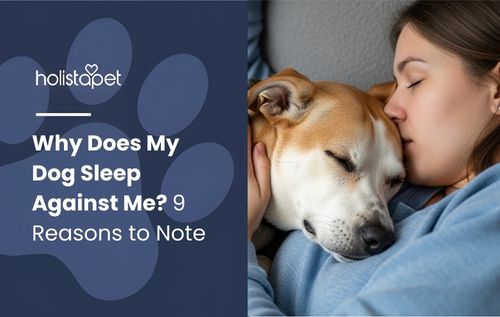
A dog that sleeps against its owner often seeks comfort, safety, and connection. This behavior shows trust and strong attachment.
Dogs stay close during rest because they feel secure near someone they see as part of their pack. Understanding this habit reveals what drives a dog to stay pressed close during sleep.
Why Does My Dog Sleep Against Me?

A 2022 study published in the journal Animals found that dogs often seek close proximity to their owners during rest because it increases feelings of security and social bonding. This behavior comes from pack instincts that encourage dogs to rest close to trusted companions.
1. Your Dog Feels Safe Near You
Dogs look for security during sleep because rest makes them vulnerable. When a dog presses against you, it shows trust and confidence in your presence. In natural pack settings, dogs sleep close to each other to reduce danger and stay protected.
2. Strong Emotional Bond
Close sleeping positions reflect a strong relationship between a dog and its owner. Dogs value social connection and choose to stay near people they trust. Physical closeness during sleep strengthens that bond.
3. Your Dog Wants Warmth
Dogs enjoy body heat during rest. Puppies often sleep in groups with littermates to stay warm, and many dogs keep this habit as they grow older. Pressing against you provides warmth that helps them relax.
4. Pack Instinct Drives the Behavior
Domestic dogs developed from wolves that relied heavily on pack structures for survival, which explains why many dogs still prefer sleeping close to trusted companions. Pack members often sleep side by side for safety and companionship. When your dog sleeps against you, it treats you as part of its pack.
5. Your Dog Wants to Protect You
Some dogs stay close because they want to guard their owner. Sleeping nearby allows them to remain alert while staying close to the person they value. This behavior connects to their protective nature.
6. Familiar Scent Brings Comfort
Dogs rely strongly on scent. Your smell signals safety and familiarity. Sleeping against you surrounds your dog with a scent that helps it relax and rest.
7. Your Dog May Feel Anxious
Some dogs look for physical contact to ease nervous feelings. Staying close during sleep can calm stress and help them feel secure, especially in unfamiliar or stressful situations.
8. Territory and Attachment
Dogs sometimes stay close to reinforce their bond with a person they value. By sleeping against you, they leave their scent and mark the space as part of their social environment.
9. Habit and Comfort
Some dogs continue this behavior simply because it feels comfortable. Once a dog learns that sleeping close to you brings relaxation, the habit often becomes part of its regular sleep routine.
What Can I Do If I Want My Dog to Sleep Independently?

Dogs can learn to sleep on their own with consistent routines and positive reinforcement. Clear boundaries, a comfortable sleep space, and calming rewards help dogs adjust to sleeping away from their owners.
|
Strategy |
Purpose |
Key Benefit |
Helpful Tip |
|
Comfortable dog bed |
Creates a safe sleeping environment |
Encourages the dog to stay in one spot |
Choose a bed that fits the dog’s size and sleeping style |
|
Consistent bedtime routine |
Signals sleep time |
Builds predictable habits |
Keep the same bedtime each night |
|
Positive reinforcement |
Rewards desired behavior |
Strengthens independent sleep training |
Reward calm behavior immediately |
|
Calming treats or CBD products |
Supports relaxation |
Helps dogs adjust to sleeping alone |
Offer CBD treats from trusted brands like Holistapet before bedtime |
|
Gradual distance training |
Reduces separation stress |
Builds confidence step by step |
Move the bed slowly over several nights |
|
Ignoring attention seeking |
Prevents reward for unwanted behavior |
Reinforces boundaries |
Stay calm and avoid reacting to whining |
|
Familiar scent items |
Adds comfort to the sleep space |
Helps the dog feel secure |
Place a worn shirt or blanket in the bed |
|
Evening exercise |
Releases excess energy |
Promotes deeper sleep |
Take the dog for a walk before bedtime |

Create a Comfortable Sleeping Area
A dog accepts independent sleep more easily when the space feels safe and inviting. Choose a quiet location and make the bed appealing.
-
Use a soft dog bed that supports joints
-
Place the bed in a calm and low traffic area
- Add a familiar blanket or toy with your scent
Build a Consistent Bedtime Routine
Dogs respond well to structure. A predictable nighttime routine signals that it is time to rest in their own space.
-
Schedule evening walks or playtime before bed
-
Offer water and a bathroom break before sleep
- Guide the dog to its bed at the same time each night
Use Positive Reinforcement
Reward the behavior you want to see. Dogs learn faster when rewards follow calm actions in their designated sleep area.
-
Give treats when the dog settles in its own bed
-
Offer calm praise to reinforce the behavior
- Avoid punishment that may create stress
Introduce Calming Rewards
Some dogs struggle with separation at night. Calming treats may help them relax and stay in their own bed. CBD dog treats and calming chews can support relaxation through the endocannabinoid system (ECS) during training.
-
Provide CBD treats shortly before bedtime
-
Use calming chews during the adjustment period
- Pair the reward with bedtime commands
Certain breeds, like Chihuahuas and Pugs, may struggle with separation at night. Owners can help them relax using CBD dog treats from reputable brands such as Holistapet. These treats contain naturally calming terpenes, including linalool and myrcene, which help dogs settle during independent sleep training. Offer the treats shortly before bedtime and pair them with consistent commands to reinforce the behavior. Gradually adjust the dog’s sleeping distance while monitoring comfort levels.
Gradually Increase Distance
Dogs adjust better when changes happen slowly. Gradual distance builds confidence without causing anxiety.
-
Start with the dog bed near your bed
-
Move the bed farther away over several nights
- Eventually place the bed in its final location
Ignore Nighttime Attention Seeking
Some dogs return to their owners because they receive attention. Calm and consistent responses help break this habit.
-
Avoid petting or talking when the dog leaves its bed
-
Guide the dog back to its sleeping spot quietly
- Stay consistent until the dog adapts
Related Post: Why Does My Dog Sleep Under My Bed?
Do Dogs Experience Separation Anxiety When They Sleep Away from You?

Yes. Some dogs develop separation anxiety when they start sleeping away from their owners. Dogs that rely on constant closeness may feel stress during this change. Veterinary research shows that separation anxiety can cause behaviors such as vocalization, restlessness, and attempts to reunite with the owner.
Common signs include:
-
Whining or barking at night
-
Scratching at doors
-
Restlessness instead of sleeping
-
Repeated attempts to reach you
- Refusing to stay in their bed
Certain factors increase the risk.
Common triggers include:
-
Sudden changes in sleeping routines
-
Low physical activity during the day
-
Limited mental stimulation
-
Previous abandonment or rehoming
- Strong dependence on the owner
Gradual training, clear routines, and calm sleep environments help dogs adjust to independent sleep.
How Can I Deal with Canine Separation Anxiety?

You can manage canine separation anxiety by building independence, maintaining consistent routines, and using calming support when needed.
-
Create predictable routines: Feed, walk, and settle your dog at consistent times to build a sense of stability.
-
Encourage independent time: Let your dog relax in a separate space during the day to strengthen comfort without constant contact.
-
Increase daily exercise: Provide regular walks and play sessions to reduce excess energy that may worsen anxiety.
-
Add mental stimulation: Use puzzle toys, treat dispensers, or training activities to keep your dog mentally engaged.
-
Reward calm behavior: Give treats or praise when your dog rests quietly in its own space.
-
Practice gradual separation: Leave the room for short periods and slowly extend the time to build confidence.
-
Create a calming sleep area: Use a quiet spot with a comfortable bed and familiar scents to promote relaxation.
- Use calming supplements when needed: Some owners introduce calming chews or CBD dog treats from wellness brands such as Holistapet to induce relaxation during training and adjustment.
Help Your Dog Sleep Better Than Before
Dogs sleep best when they feel safe, comfortable, and relaxed. Clear routines, proper training, and supportive solutions help dogs develop healthy sleep habits while strengthening their confidence and overall well being.
Click here to browse more dog care blogs and continue learning.
Frequently Asked Questions
Is it normal for a dog to sleep pressed tightly against its owner?
Yes. Many dogs choose this position because it feels secure and familiar. Close contact often signals comfort and trust in the owner.
Do certain dog breeds prefer sleeping close to their owners?
Yes. Companion breeds such as Cavalier King Charles Spaniels, Pugs, and Chihuahuas often prefer close contact because they develop strong attachment to their owners.
Should I worry if my dog suddenly starts sleeping closer than usual?
Sudden changes in sleep behavior can signal stress, illness, or environmental changes. Monitor other behaviors and consult a veterinarian if unusual signs appear.
Can puppies grow out of the habit of sleeping against their owners?
Yes. Many puppies develop more independent sleep habits as they mature, especially with consistent routines and training.
Does age affect how closely a dog sleeps with its owner?
Yes. Senior dogs often seek more physical contact because warmth and closeness help them stay comfortable during rest.
Can sleeping positions reveal how relaxed a dog feels?
Yes. A dog that sleeps pressed against a trusted person often shows deep relaxation and confidence in its surroundings.
 CBD Oil for Dogs - Fast Acting
 Chicken Flavored CBD Oil For Dogs - Easy Dose
 Salmon Flavored CBD Oil For Dogs - Highly Rated
 CBG Oil for Dogs and Cats - Loved by Thousands









Leave a comment
All comments are moderated before being published.
This site is protected by hCaptcha and the hCaptcha Privacy Policy and Terms of Service apply.